
The boundaries between physical and digital realities are dissolving at an unprecedented pace, creating hybrid environments where human experience transcends traditional limitations. This convergence is reshaping how we interact with technology, each other, and the world around us.

Cross-reality technologies are no longer confined to science fiction or specialized laboratories. They’re becoming integral to everyday life, transforming entertainment, education, healthcare, and professional collaboration. As we stand at this technological crossroads, understanding the trajectory of immersive innovation becomes essential for anyone looking to navigate the emerging digital landscape.
🌐 The Cross-Reality Spectrum: Understanding the Continuum
Cross-reality (XR) encompasses the entire spectrum of experiences that blend physical and digital worlds. This umbrella term includes virtual reality (VR), augmented reality (AR), mixed reality (MR), and everything in between. Unlike isolated technologies, cross-reality represents a fluid continuum where users can seamlessly transition between different levels of immersion.
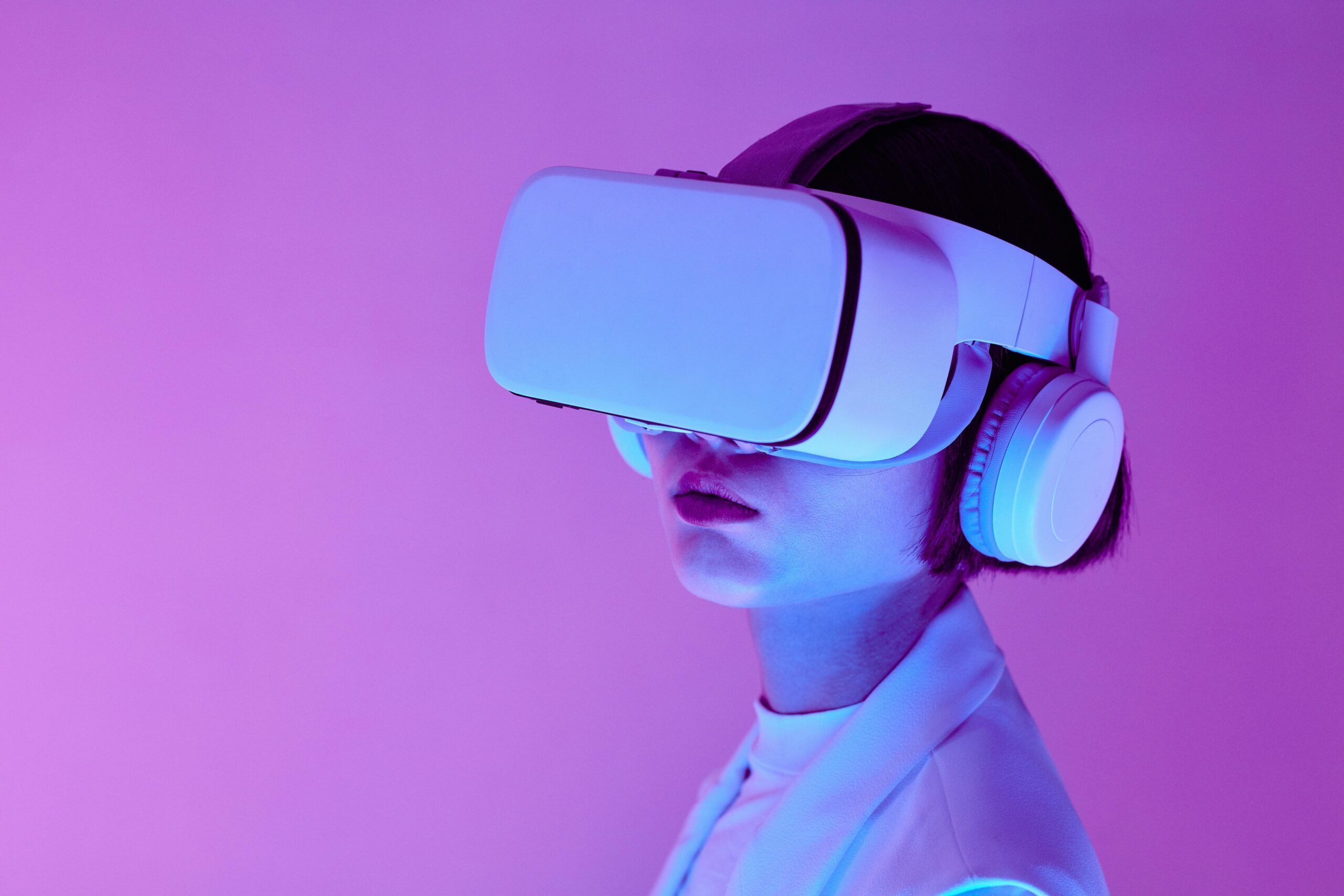
Virtual reality creates completely synthetic environments that replace physical surroundings entirely. Users don headsets that transport them to digital worlds, disconnecting them from immediate physical reality. This total immersion offers unprecedented opportunities for escapism, training simulations, and creative exploration.
Augmented reality takes the opposite approach by overlaying digital information onto the physical world. Through smartphones, tablets, or specialized glasses, users see their real environment enhanced with virtual elements. This technology has already proven its mainstream appeal through applications ranging from navigation assistance to interactive gaming experiences.
Mixed reality occupies the fascinating middle ground, allowing digital and physical objects to coexist and interact in real-time. Users can manipulate virtual objects as if they were tangible, while those objects respond to the physical environment with realistic lighting, occlusion, and spatial awareness.
🧠 Perceptual Frontiers: How Our Brains Adapt to Synthetic Realities
The human brain demonstrates remarkable plasticity when encountering cross-reality experiences. Neuroscientific research reveals that immersive technologies activate neural pathways similarly to real-world experiences, creating genuine emotional and physiological responses. This neurological authenticity explains why virtual experiences can feel so profoundly real.
Our perceptual systems evolved to interpret physical reality through multiple sensory channels working in concert. Cross-reality technologies are becoming increasingly sophisticated at replicating this multisensory integration. Visual displays now approach retinal resolution limits, spatial audio creates convincing three-dimensional soundscapes, and haptic feedback systems simulate the sensation of touch with growing precision.
The Challenge of Presence and Embodiment
Presence—the psychological sensation of “being there” in a virtual environment—represents the holy grail of immersive technology. Achieving convincing presence requires synchronizing multiple technical and perceptual elements. Visual fidelity must be high enough to prevent breaking immersion, latency must be low enough that movements feel natural, and the field of view must encompass peripheral vision.
Embodiment takes presence further by making users feel that virtual bodies are their own. This phenomenon has profound implications for therapy, training, and social interaction in virtual spaces. Studies show that people’s behavior in virtual environments changes based on the characteristics of their digital avatars, a phenomenon called the Proteus effect.
💡 Innovation Drivers: Technologies Powering the Cross-Reality Revolution
Several converging technological trends are accelerating cross-reality development. Understanding these underlying innovations helps contextualize where immersive experiences are headed and what becomes possible as these technologies mature.
Computational Power and Edge Processing
Modern cross-reality experiences demand massive computational resources. Rendering realistic environments at high frame rates while tracking user position, processing sensory inputs, and maintaining network connections requires processing capabilities that were unimaginable a decade ago. The shift toward edge computing—processing data closer to where it’s generated—reduces latency and enables more responsive experiences.
Cloud rendering represents another breakthrough, allowing lightweight devices to access powerful remote servers that handle intensive graphical processing. This approach democratizes access to high-quality experiences without requiring expensive local hardware.
Sensor Fusion and Spatial Computing
Cross-reality devices integrate data from dozens of sensors—accelerometers, gyroscopes, cameras, depth sensors, and more—to understand their position and orientation in space. This sensor fusion creates detailed spatial maps that allow virtual objects to interact convincingly with physical environments.
Advanced computer vision algorithms identify surfaces, recognize objects, and even interpret hand gestures with increasing accuracy. These capabilities transform any environment into an interactive canvas where digital content can be precisely anchored and manipulated intuitively.
Display Technologies Breaking Barriers
Display innovation remains central to improving immersive experiences. Manufacturers are developing screens with higher pixel densities, wider fields of view, and better color reproduction. Varifocal displays that adjust focus based on where users look promise to eliminate the vergence-accommodation conflict that causes discomfort in current headsets.
Transparent displays and waveguide optics enable augmented reality glasses that look increasingly like ordinary eyewear rather than bulky technological apparatus. This form factor evolution will prove crucial for mainstream adoption beyond early adopter communities.
🎯 Application Horizons: Where Cross-Reality Creates Value
The practical applications of cross-reality technologies extend far beyond entertainment, touching nearly every sector of human activity. These implementations demonstrate how immersive innovation solves real problems and creates genuine value.
Transforming Education and Training
Educational institutions are discovering that immersive experiences dramatically improve learning outcomes. Complex three-dimensional concepts become tangible and manipulable in virtual spaces. Medical students practice surgical procedures without risk to patients. Engineers visualize intricate mechanical systems from impossible perspectives. History comes alive as students explore reconstructed ancient civilizations.
Corporate training programs leverage cross-reality for everything from workplace safety simulations to customer service role-playing. These virtual training environments allow employees to practice high-stakes scenarios repeatedly without real-world consequences, accelerating skill development while reducing training costs.
Revolutionizing Healthcare Delivery
Healthcare applications of cross-reality span prevention, diagnosis, treatment, and rehabilitation. Surgeons use augmented reality overlays during operations to visualize internal anatomy without looking away from patients. These systems integrate real-time imaging data, providing guidance that improves precision and reduces complications.
Virtual reality has proven remarkably effective for pain management and psychological therapy. Immersive distraction reduces perceived pain during medical procedures, while exposure therapy in controlled virtual environments helps patients overcome phobias and PTSD. Rehabilitation programs use gamified exercises that motivate patients to complete physical therapy regimens more consistently.
Redefining Collaborative Work
Remote work technologies took a quantum leap forward with immersive collaboration platforms. Rather than staring at grid layouts of video feeds, teams meet in shared virtual spaces where spatial audio, body language, and environmental context create more natural interactions. Virtual whiteboards become three-dimensional canvases where ideas can be sketched, manipulated, and refined collectively.
Design and engineering teams use mixed reality to review full-scale prototypes before manufacturing physical versions. Stakeholders located globally can examine proposed products from every angle, identifying issues and suggesting improvements in real-time. This workflow dramatically compresses development timelines while reducing costly iterations.
🔮 Emerging Paradigms: The Next Wave of Immersive Experiences
Current cross-reality applications only scratch the surface of what becomes possible as technologies mature and converge. Several emerging paradigms promise to unlock entirely new dimensions of experience in the coming years.
Neural Interfaces and Direct Perception
Brain-computer interfaces represent the ultimate expression of immersive technology—bypassing sensory organs entirely to communicate directly with neural systems. While still largely experimental, these interfaces promise to create experiences indistinguishable from physical reality by stimulating the precise neural patterns associated with sensory perception.
Non-invasive neural interfaces using advanced electroencephalography can already detect basic intentions and emotional states. As this technology advances, thought-based control of virtual environments may replace hand controllers and voice commands, creating more intuitive and seamless interactions.
Persistent Shared Worlds
The concept of the metaverse—persistent, shared virtual worlds where digital life parallels physical existence—captures imagination across industries. These environments maintain continuity regardless of whether specific users are present, creating digital spaces with their own economies, social structures, and cultural phenomena.
Unlike current multiplayer games that reset or instance separately, true metaverse platforms will function as alternate realities where actions have lasting consequences and relationships develop over time. The technical infrastructure required for such persistent worlds at scale remains challenging but increasingly achievable.
Context-Aware Augmentation
Future augmented reality systems will understand context deeply, providing relevant information and functionality based on what users are doing, where they are, and what they’re looking at. Artificial intelligence will filter and prioritize digital overlays to prevent information overload while ensuring useful enhancements appear precisely when needed.
This contextual intelligence transforms AR from novelty to necessity. Imagine glasses that automatically translate foreign text in your field of view, overlay assembly instructions on complex machinery you’re repairing, or highlight ingredients you’re allergic to while grocery shopping—all without requiring manual activation.
⚖️ Navigating Challenges: Ethics, Privacy, and Digital Wellbeing
The transformative potential of cross-reality technologies brings corresponding responsibilities and challenges. Addressing these concerns proactively will determine whether immersive innovation fulfills its promise or creates new problems.
Privacy in Persistent Surveillance
Cross-reality devices equipped with always-on cameras, microphones, and environmental sensors raise significant privacy concerns. These systems capture detailed information about users’ surroundings, behaviors, and interactions. Who controls this data? How long is it retained? What prevents misuse by corporations or governments?
Establishing clear privacy frameworks specific to immersive technologies becomes essential. Users need transparency about data collection, meaningful control over their information, and assurance that intimate details of their lives aren’t being exploited or exposed without consent.
Digital Addiction and Reality Displacement
As virtual experiences become increasingly compelling, concerns about addiction and excessive escapism intensify. If synthetic realities offer more excitement, accomplishment, and social connection than physical existence, some individuals may withdraw from offline life entirely.
Designing immersive technologies with wellbeing in mind requires intentional choices that promote healthy usage patterns. Built-in reminders to take breaks, activity tracking that encourages balance, and features that enhance rather than replace physical relationships all contribute to more sustainable adoption.
Accessibility and the Digital Divide
Ensuring cross-reality technologies remain accessible to diverse populations presents both technical and economic challenges. Current devices often fail to accommodate users with disabilities, while high costs exclude those with limited resources. As more services and experiences migrate to immersive platforms, this digital divide could exacerbate existing inequalities.
Inclusive design practices that consider varied abilities, affordable hardware options, and public access points will be necessary to prevent cross-reality from becoming a privilege reserved for the affluent.
🚀 The Road Ahead: Preparing for an Immersive Future
Cross-reality technologies are transitioning from emerging novelties to foundational infrastructure for human experience. This shift will unfold gradually but inexorably, reshaping how we work, learn, play, and connect with one another.
Organizations across sectors should begin developing immersive strategies now rather than waiting for full mainstream adoption. Early experimentation allows learning what works, building institutional knowledge, and establishing positions in emerging ecosystems before competition intensifies.
For individuals, cultivating digital literacy that includes understanding immersive technologies becomes increasingly important. Just as internet fluency became essential in previous decades, navigating cross-reality environments will soon constitute a baseline competency for participation in modern society.
The most successful approaches will balance enthusiasm for innovation with thoughtful consideration of human needs and values. Technology serves humanity best when designed with intention, deployed with care, and regulated with wisdom. As we unlock new dimensions of experience through cross-reality perception, maintaining this balance will determine whether we create truly better futures or merely more elaborate distractions.
The convergence of physical and digital realities represents one of humanity’s most ambitious technological undertakings. It promises to expand human capability, deepen understanding, and create experiences previously confined to imagination. By approaching this transformation with both excitement and responsibility, we can harness immersive innovation to enhance rather than diminish what makes us human—our curiosity, creativity, and capacity for meaningful connection.