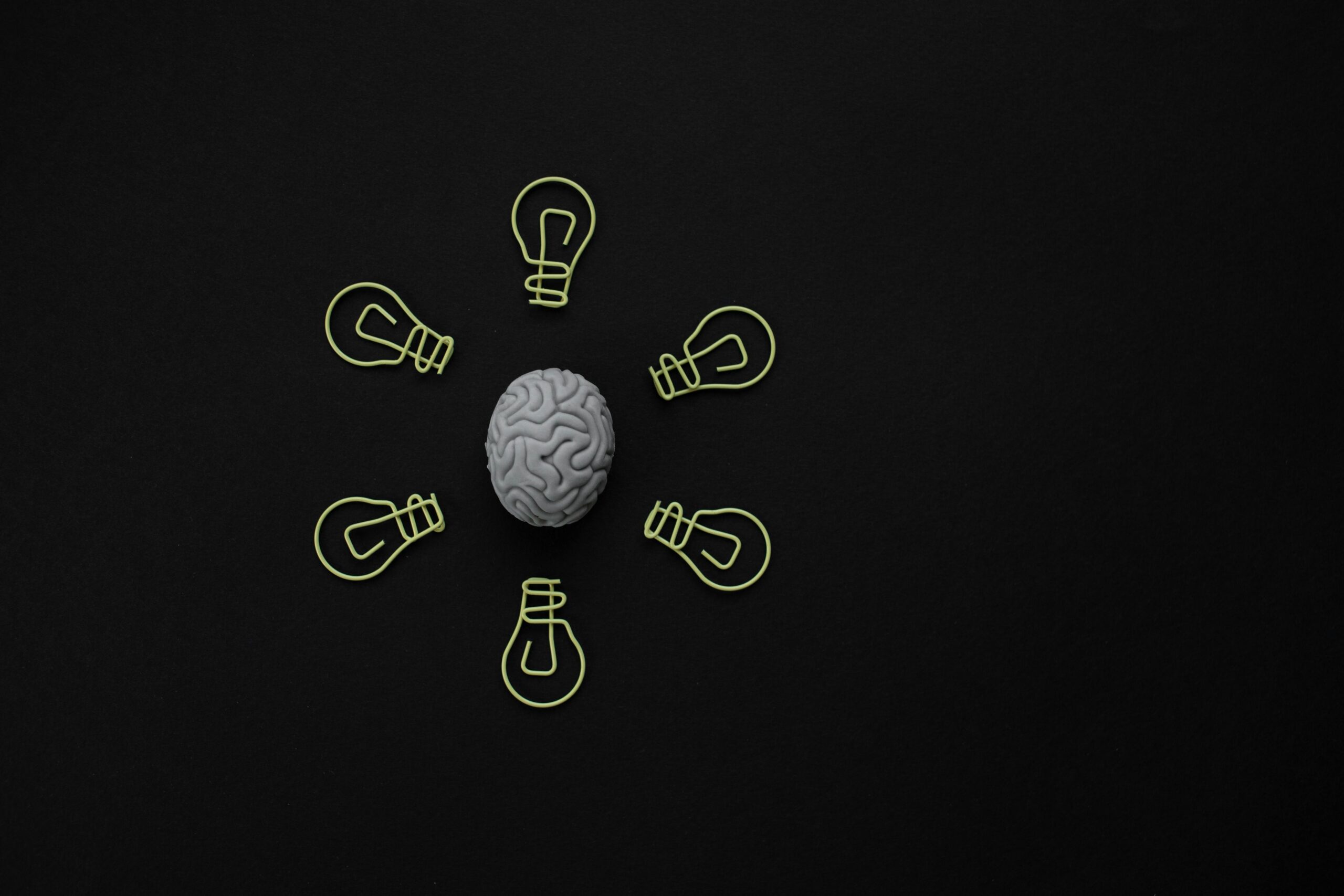
The human mind possesses an extraordinary capacity that often remains untapped: the ability to think in nonlinear patterns. Unlike conventional sequential reasoning, nonlinear cognition allows us to connect disparate ideas, leap across conceptual boundaries, and generate solutions that linear thinking simply cannot reach.

In an increasingly complex world where traditional problem-solving methods often fall short, understanding and harnessing nonlinear cognition has become essential for innovation, creativity, and breakthrough thinking. This cognitive approach doesn’t follow a straight path from point A to point B; instead, it explores multiple dimensions simultaneously, creating unexpected connections that spark revolutionary ideas.
🧠 Understanding the Foundation of Nonlinear Cognition
Nonlinear cognition represents a departure from the traditional step-by-step thinking process that most educational systems emphasize. While linear thinking follows logical sequences and predictable patterns, nonlinear thinking embraces complexity, ambiguity, and the interconnected nature of knowledge and experience.
This cognitive approach mirrors how our brain actually works. Neuroscientific research reveals that neural networks don’t process information in straight lines but rather through intricate webs of connections. When we engage in nonlinear thinking, we’re essentially working with our brain’s natural architecture rather than against it.
The key characteristics of nonlinear cognition include the ability to hold multiple perspectives simultaneously, make intuitive leaps based on pattern recognition, synthesize information from diverse domains, and embrace paradoxes without immediately seeking resolution. These qualities enable problem-solvers to navigate uncertainty and discover innovative pathways that conventional thinking overlooks.
The Science Behind Nonlinear Thinking Patterns
Modern brain imaging studies have demonstrated that creative insights and innovative solutions often emerge from what neuroscientists call “network switching.” This process involves the brain rapidly alternating between focused attention networks and default mode networks, allowing for both concentrated analysis and expansive ideation.
The prefrontal cortex, traditionally associated with logical reasoning, works in concert with the hippocampus and various sensory processing centers to create nonlinear cognitive patterns. This collaboration enables the brain to retrieve seemingly unrelated memories, combine them with current sensory input, and generate novel connections that form the basis of innovative thinking.
🚀 Breaking Free from Linear Thinking Constraints
Most professional and educational environments inadvertently condition us toward linear thinking. We’re taught to follow procedures, respect hierarchies of information, and arrive at conclusions through predetermined steps. While this approach has value for certain tasks, it severely limits our capacity for innovation and creative problem-solving.
Recognizing the constraints of purely linear thinking represents the first step toward cognitive liberation. These limitations manifest in various ways: difficulty adapting to unexpected changes, challenges in seeing alternative solutions, tendency to apply past solutions to new problems without modification, and resistance to ideas that don’t fit established frameworks.
Identifying Your Cognitive Patterns
Before transforming your thinking approach, it’s essential to understand your current cognitive tendencies. Do you feel uncomfortable when problems don’t have clear-cut solutions? Do you prefer following established procedures rather than experimenting with new approaches? Do you struggle when multiple conflicting ideas need simultaneous consideration?
These indicators suggest a predominance of linear thinking patterns. Acknowledging them without judgment creates the foundation for developing more flexible cognitive strategies that incorporate both linear and nonlinear approaches depending on the situation’s demands.
🎨 Cultivating Nonlinear Cognitive Abilities
Developing nonlinear cognition isn’t about abandoning logical thinking but rather expanding your cognitive repertoire. The most effective problem-solvers and innovators can seamlessly shift between linear and nonlinear modes, applying each approach where it delivers maximum value.
Practical Techniques for Enhancing Nonlinear Thinking
Several evidence-based practices can strengthen your nonlinear cognitive capabilities. Mind mapping represents one powerful technique that visually captures the associative nature of ideas. Unlike traditional outlines that enforce hierarchy, mind maps allow concepts to branch organically, revealing unexpected connections.
Another effective approach involves deliberate exposure to diverse knowledge domains. When you study subjects outside your expertise—whether art, philosophy, physics, or anthropology—you create a richer mental database from which your brain can draw unexpected connections. This cross-pollination of ideas fuels innovative thinking in ways that staying within familiar territory never can.
Embracing paradoxes and contradictions also develops nonlinear cognitive strength. Instead of immediately seeking resolution when encountering opposing ideas, practice holding them simultaneously. This cognitive flexibility allows for synthesis at higher conceptual levels, where apparent contradictions often resolve into more sophisticated understanding.
The Role of Strategic Daydreaming
Contrary to productivity culture’s emphasis on constant focused work, allowing your mind to wander deliberately can enhance nonlinear thinking. During these periods, your brain’s default mode network activates, making unexpected connections between information stored in various mental compartments.
Scheduling regular periods for unfocused thinking—walking without podcasts, showering without planning, or simply gazing out a window—provides the mental space where innovative ideas often emerge. Many breakthrough insights throughout history have occurred during these seemingly unproductive moments.
💡 Applying Nonlinear Cognition to Real-World Problems
The true value of nonlinear thinking becomes apparent when facing complex challenges that resist conventional solutions. These situations often involve multiple stakeholders, competing priorities, incomplete information, and unpredictable variables—precisely the conditions where nonlinear cognition excels.
Business Innovation and Strategic Planning
Organizations increasingly recognize that competitive advantage comes from unconventional thinking. Companies like Apple, Google, and Tesla have built their success on nonlinear approaches to product development, market positioning, and business model innovation.
When Apple developed the iPhone, they didn’t simply improve existing mobile phones. They applied nonlinear thinking by connecting concepts from computing, telecommunications, entertainment, and design in ways competitors hadn’t imagined. This synthesis created an entirely new product category that transformed multiple industries simultaneously.
Scientific Discovery and Research
Many significant scientific breakthroughs have resulted from nonlinear cognitive leaps rather than incremental linear progress. The discovery of penicillin, the development of quantum mechanics, and the structure of DNA all involved connecting observations and concepts in novel ways that defied conventional thinking.
Researchers who cultivate nonlinear cognition can identify patterns across seemingly unrelated phenomena, formulate hypotheses that transcend disciplinary boundaries, and design experiments that test unconventional ideas. This approach accelerates innovation by exploring conceptual territories that linear thinking never reaches.
🔄 Integrating Nonlinear and Linear Thinking
The most sophisticated cognitive approach doesn’t favor one thinking style over another but rather integrates both appropriately. Linear thinking excels at implementation, optimization, and systematic analysis. Nonlinear thinking drives innovation, adaptation, and creative synthesis.
Effective problem-solving typically requires both modes: nonlinear cognition to generate breakthrough ideas and linear thinking to refine and implement them. Understanding when to employ each approach represents a meta-skill that amplifies both creative and analytical capabilities.
Creating Your Cognitive Toolkit
Building a versatile cognitive toolkit involves practicing specific techniques for each thinking mode and developing the awareness to switch between them fluidly. For linear tasks requiring precision and systematic execution, employ checklists, standard operating procedures, and logical frameworks.
For situations demanding innovation and creative problem-solving, activate nonlinear cognition through brainstorming without judgment, exploring analogies from different domains, questioning fundamental assumptions, and allowing ideas to incubate before forcing conclusions.
🌟 Overcoming Obstacles to Nonlinear Thinking
Despite its benefits, several barriers commonly prevent people from accessing nonlinear cognitive abilities. Organizational cultures that punish failure discourage the experimentation essential for nonlinear thinking. Educational systems emphasizing standardized testing reinforce linear patterns at the expense of creative exploration.
Cognitive biases also constrain nonlinear thinking. Confirmation bias leads us to seek information supporting existing beliefs rather than exploring contradictory perspectives. Functional fixedness prevents us from seeing alternative uses for familiar objects or concepts. Recognizing these mental traps represents the first step toward transcending them.
Building a Supportive Environment
Your physical and social environment significantly influences cognitive flexibility. Surrounding yourself with diverse perspectives challenges mental rigidity. Engaging with people from different backgrounds, disciplines, and worldviews naturally stimulates nonlinear connections by exposing you to alternative thought patterns.
Physical spaces also matter. Environments featuring varied visual stimuli, opportunities for movement, and natural elements have been shown to enhance creative thinking. In contrast, sterile, unchanging environments tend to reinforce habitual linear thought patterns.
📈 Measuring Progress in Nonlinear Cognition
Unlike linear skills that lend themselves to straightforward assessment, evaluating growth in nonlinear thinking requires different metrics. Rather than seeking quantifiable improvements, observe qualitative changes in your approach to challenges.
Notice whether you’re generating more diverse solutions to problems, whether you can comfortably hold multiple perspectives simultaneously, and whether you’re making connections between previously separate knowledge domains. These indicators suggest expanding nonlinear cognitive capacity.
Indicators of Enhanced Nonlinear Thinking
- Increased comfort with ambiguity and incomplete information
- More frequent “aha moments” where disparate concepts suddenly connect
- Greater ease in seeing multiple solutions to single problems
- Enhanced ability to adapt existing knowledge to novel situations
- Improved capacity to explain complex ideas through unexpected analogies
- Reduced anxiety when facing problems without obvious solutions
🎯 Practical Exercises for Daily Practice
Like any cognitive skill, nonlinear thinking strengthens through consistent practice. Incorporating specific exercises into your daily routine gradually rewires neural pathways, making nonlinear cognition increasingly accessible and natural.
Start each day by considering a familiar object and listing unconventional uses for it. This simple exercise, known as alternative uses thinking, activates divergent thought processes. For example, contemplate how a paper clip might serve as a tool, artwork, educational device, or mechanical component.
Another powerful practice involves random word association. Select two unrelated words—perhaps “ocean” and “keyboard”—and challenge yourself to find meaningful connections between them. This exercise strengthens your brain’s ability to create conceptual bridges across semantic distances.
The Perspective Shifting Exercise
When facing any problem, systematically consider it from multiple viewpoints. How would a child approach this? What would an engineer suggest? How might an artist frame the issue? What would someone from a completely different culture recommend? This deliberate perspective-shifting develops cognitive flexibility essential for nonlinear thinking.
🌐 The Future of Nonlinear Cognition in an AI-Powered World
As artificial intelligence increasingly handles routine linear tasks, uniquely human cognitive abilities like nonlinear thinking become more valuable. Machines excel at optimization, pattern matching within defined parameters, and processing vast data sets systematically. However, the creative leaps, intuitive insights, and contextual understanding that characterize nonlinear cognition remain distinctly human capabilities.
Developing these abilities positions you to thrive in an evolving economy where creativity, innovation, and adaptive thinking command premium value. Rather than competing with AI on linear processing speed and accuracy, cultivating nonlinear cognition allows you to complement technological capabilities with irreplaceable human insight.

🔮 Transforming Your Cognitive Potential
Unlocking nonlinear cognitive power represents a transformative journey rather than a destination. As you progressively integrate these thinking patterns, you’ll notice profound changes in how you approach problems, generate ideas, and navigate complexity.
The path involves patience with yourself as you develop unfamiliar cognitive muscles. Some days linear thinking will feel more comfortable; other times nonlinear insights will flow effortlessly. Both patterns have their place in a comprehensive cognitive toolkit.
Remember that developing nonlinear cognition doesn’t mean abandoning logical reasoning or systematic thinking. Instead, it expands your mental capabilities, giving you access to powerful cognitive resources that remain dormant in those who rely exclusively on linear approaches.
Begin today by questioning one assumption you’ve held without examination, exploring one topic completely outside your expertise, or connecting two ideas that seem to have nothing in common. These small steps initiate the neurological changes that, over time, unlock unprecedented creative and problem-solving capabilities.
The most significant innovations, discoveries, and solutions have always emerged from minds willing to think differently. By embracing nonlinear cognition, you join a tradition of breakthrough thinkers who refused to accept that problems could only be solved through conventional means. Your unique perspective, enhanced by flexible cognitive approaches, might just generate the next idea that changes everything. ✨